How to Calculate the ROI of Automating a Business Process
A step-by-step method to estimate the return on automating a business task: time saved, error costs, full running costs and payback period.
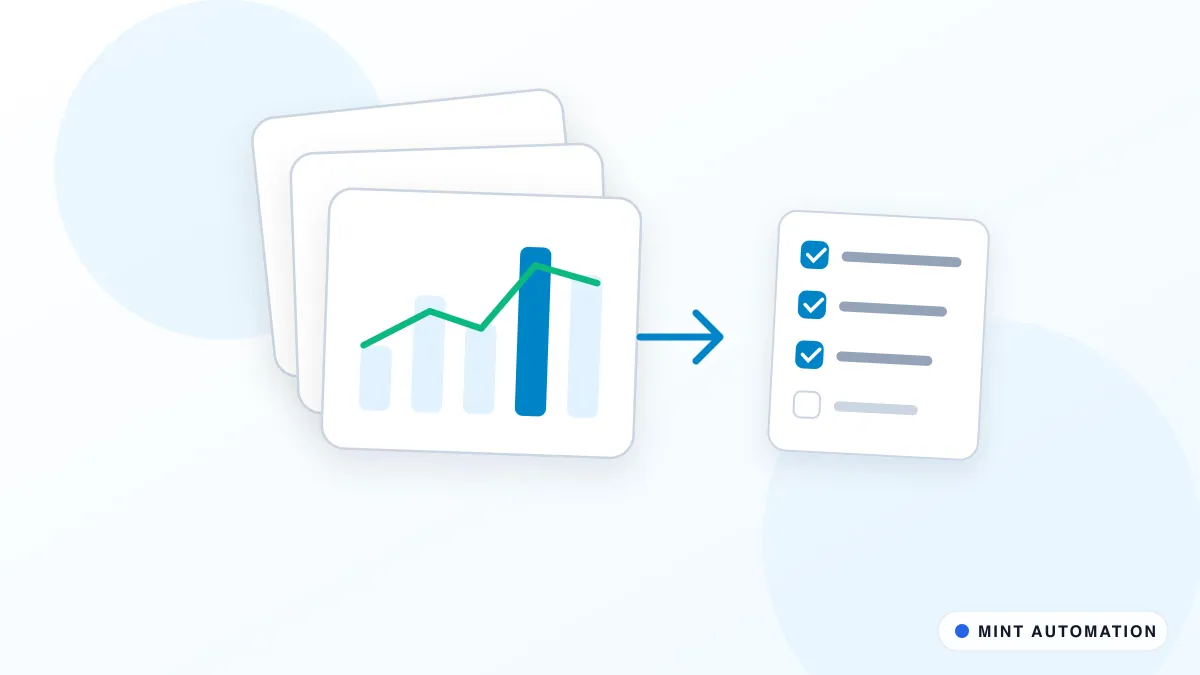
The return on investment (ROI) of automation is the value you get back, mainly time saved and errors avoided, compared with the full cost of building and running the automation. You can estimate it in an afternoon with a spreadsheet and honest numbers, and you should do so before committing to any project.
This guide gives you a simple formula, a step-by-step way to fill it in, a worked example, and the mistakes that make ROI estimates misleading.
The simple ROI formula
At its core, the calculation compares annual benefit with total cost:
ROI = (annual benefit − annual cost) ÷ annual cost
And the number most owners actually care about:
Payback period = upfront cost ÷ monthly net benefit
The benefit has three parts: time saved, errors avoided and speed gained. The cost has three parts too: building it, running it and maintaining it. The rest of this guide is about filling in those six boxes honestly.
Step 1: Measure the time the task really takes
Most people underestimate how long routine tasks take, because the work is spread across the day in small pieces. Measure it rather than guessing:
- Ask the person who does the task to log it for one or two normal weeks, including interruptions, corrections and chasing.
- Note how many times the task happens (invoices entered, leads logged, reports built) so you can calculate time per item.
- Multiply by your monthly volume, and adjust for busy periods such as month end or seasonal peaks.
Then put a value on that time. Use the full cost of the person’s hour, including employment costs and overheads, not just their salary. If the task is done by a senior person, the value of their time is higher, and so is the opportunity cost of using it for data entry.
Step 2: Count the cost of errors and delays
Manual work fails in predictable ways, and each failure has a cost:
- Rework. Finding and fixing a wrong entry takes far longer than entering it correctly in the first place.
- Direct losses. Duplicate payments, missed discounts, late fees and incorrect invoices to customers.
- Lost opportunities. An enquiry answered the next day instead of within minutes is more likely to go to a competitor.
- Customer goodwill. Wrong orders and chasing emails damage relationships in ways that are hard to price but real.
Look back over the last few months and list the incidents you can identify. Estimate a typical cost per incident and how often it happens. Keep this figure conservative; you want an estimate you would defend to a sceptical business partner.
Step 3: Add speed and capacity benefits, carefully
Some benefits are real but easy to overstate:
- Faster response. Instant lead follow-up or same-day invoice approval can improve conversion and supplier relationships.
- Capacity to grow. If automation lets you handle more orders without hiring, that avoided hire is a benefit when it would genuinely have been needed.
- Fewer bottlenecks. When one person is the only one who knows how to do a task, automating it reduces the risk when they are away.
Only count these when you can describe exactly how the value appears. “Better efficiency” is not a number. “We would have hired a part-time administrator next quarter” is.
Step 4: Count the full cost of the automation
This is where many business cases go wrong. Include all of it:
- Build cost. The one-off price to design, build and test the automation. With MINT this is a fixed quote, typically in the $499–$1,200 range for standard custom automations and $1,500–$3,500 for enterprise or ERP-connected work.
- Running costs. Any software subscriptions, hosting or usage fees the automation needs.
- Maintenance. Other systems change: supplier portals are redesigned and accounting tools release updates. Budget for support.
- Your team’s time. Someone needs to explain the process, review test results and handle exceptions in the first weeks.
- Exceptions. Most automations hand unusual cases back to a person. That remaining manual time is not saved, so do not count it as a benefit.
A worked example
Here is an illustrative example for a small distribution business automating supplier invoice entry. The figures are hypothetical assumptions to show the method; replace them with your own measurements.
| Item | Assumption | Monthly value |
|---|---|---|
| Invoices per month | 300 | — |
| Time per invoice today (entry, checks, chasing) | 6 minutes | 30 hours |
| Share still handled by a person after automation | 15% | 4.5 hours remain |
| Time saved | — | 25.5 hours |
| Cost of an hour of admin time (fully loaded) | $25 | $637 saved |
| Error and late-fee costs avoided (conservative) | — | $100 |
| Running and support costs | — | −$60 |
| Net monthly benefit | — | $677 |
If the one-off build cost in this example were $1,200, the payback period would be about 1.8 months ($1,200 ÷ $677). Over a year, the net benefit would be roughly $8,100 against that build cost. Your figures will differ, which is why measuring Step 1 properly matters more than any template.
Turning the numbers into a one-page business case
If you need to convince a business partner, a finance lead or simply yourself, put the result on one page. Decision-makers rarely need more, and a short document forces you to be clear. Include:
- The task today. One paragraph on what happens, who does it, how often, and what goes wrong.
- The proposed change. What the automation will do, what will still be handled by a person, and which systems it touches.
- The numbers. Monthly time saved, error costs avoided, running costs, the one-off build cost and the payback period, each with its source: “measured over two weeks”, “from last quarter’s incident log”, “fixed quote”.
- The risks. What could make the savings smaller, such as a planned software change or seasonal volume, and how you would know.
- The decision and the review date. What you are approving and when you will compare the results with the baseline.
Writing the risks down is not a weakness in the case. It shows the estimate is honest, and it tells you exactly what to watch after launch.
How to check the return after launch
An ROI estimate is a prediction; after launch you can measure the real thing. Use the same measures you collected in Step 1 so the comparison is fair:
- Hours spent on the task, including time on exceptions the automation hands back.
- Exception rate, meaning the share of items that still need a person. A high rate usually points to a rule worth refining.
- Error incidents, such as duplicates, corrections and customer complaints, compared with the months before.
- Speed, such as time from invoice received to approved, or from enquiry to first reply.
Review at around 30 days and again at around 90 days. The first review catches setup issues; the second shows the steady state. If the results fall short, the cause is usually a process detail that can be adjusted rather than a reason to abandon the automation.
When automation is not worth it
A careful calculation will sometimes say no, and that is a useful result. Automation is usually not worth it when:
- The task happens rarely, so even large savings per occurrence add up to little.
- Every instance is different and needs judgement, so most cases would fall back to a person anyway.
- The process is about to change because you are switching software or restructuring a team.
- The data is too messy to rely on. In that case the first investment should be cleaning it.
If one task does not pay off, the next one on your list might. Our guide on what can be automated in your business helps you build that list, and the free automation assessment checks individual tasks quickly.
Mistakes that make ROI estimates wrong
- Guessing time instead of measuring it. Estimates from memory are often far off in either direction.
- Counting the same benefit twice. If time saved is already valued, do not also count the same hours again as extra capacity.
- Ignoring maintenance. An automation nobody maintains will eventually break quietly. Budget for ongoing care.
- Valuing time nobody will use. Saved hours only create value when they go somewhere useful.
- Comparing against perfection. Compare with how the work is done today, not with an ideal process that does not exist.
Once you have a reliable method, apply it to your top few candidates, from invoice processing to client onboarding, and start with the one that pays back fastest. MINT’s Automated Report Builder can also help you measure results after launch.
How Mannveer International (MINT) Can Help
Mannveer International (MINT) helps you check the numbers before you spend anything. We look at how the task is done today, help you estimate time and error costs realistically, and give you a fixed quote so the cost side of the equation is known. If the return is not there, we will tell you.
When it is, we build the automation around your existing tools, typically within 3 to 7 business days for standard projects, and support it afterwards so the savings last. See our custom automation services and pricing for how engagements are structured.
- Start a free automation assessment to see which tasks are worth automating
- Contact MINT for a fixed-price quote on a specific task
- Connect with MINT by WhatsApp or phone for a quick conversation
- Browse MINT case studies to see the kind of work we deliver
FAQ
What is a good payback period for business automation?
Many small businesses look for a payback period of under a year for a single automation, and well-chosen first projects often pay back much faster. The right threshold depends on your cash position and how certain the savings are, so use conservative estimates.
Should I count time saved if I am not reducing staff?
Yes, as long as the time is used for something valuable, such as more sales calls, faster customer replies or work you currently outsource. Be honest: if the freed time will simply disappear, count only the error and delay savings.
What costs do people forget when calculating automation ROI?
The most commonly missed costs are ongoing maintenance when other systems change, subscription or hosting fees, the internal time to define and test the process, and handling exceptions. Include all of them for a realistic figure.
Can MINT help estimate ROI before I commit?
Yes. The free automation assessment gives a quick read on how automatable a task is, and a scoping call produces a fixed quote, so you can compare a known cost against your own time and error estimates before deciding.
Wondering where AI fits in your operations?
MINT scopes practical AI automations with clear costs, controls, and owners.